
Online banks vs traditional banks
is one of the biggest comparisons consumers make when choosing where to keep their money. While both offer checking accounts, savings accounts, and financial services, they differ in fees, convenience, interest rates, and customer support.
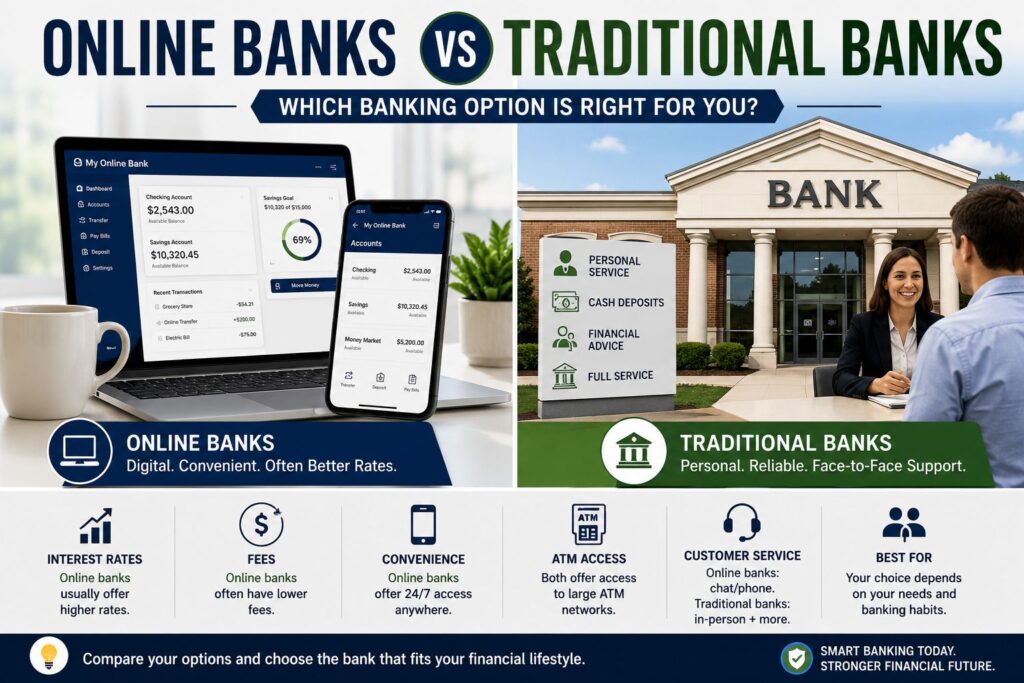
Both options offer advantages and disadvantages, and the best choice depends on your financial needs and lifestyle. Understanding how each type of bank works can help you make a smarter decision.
What Is a Traditional Bank?
A traditional bank operates through physical branch locations where customers can receive in-person assistance.
Examples include large national banks and local community banks.
Traditional banks typically offer:
• Checking accounts
• Savings accounts
• Loans and mortgages
• Credit cards
• Investment services
• In-person customer support
Many traditional banks also provide online and mobile banking features.
What Is an Online Bank?
An online bank operates primarily through digital platforms without physical branches.
Customers manage their accounts through:
• Mobile apps
• Websites
• Online customer support
• ATM networks
Because online banks have lower operating costs, they often pass those savings to customers through better rates and lower fees.
Benefits of Online Banks
Higher Interest Rates
Online banks often offer higher annual percentage yields (APYs) on savings accounts compared to traditional banks.
This can help your savings grow faster over time.
Lower Fees
Many online banks provide:
• No monthly maintenance fees
• No minimum balance requirements
• Free transfers
• Reduced ATM fees
Convenience
You can access your account 24/7 from anywhere with an internet connection.
Most online banking apps allow:
• Mobile check deposits
• Instant transfers
• Bill payments
• Spending notifications
Faster Innovation
Online banks often introduce new digital tools and features more quickly than traditional banks.
Benefits of Traditional Banks
In-Person Service
Some people prefer face-to-face interactions when handling important financial matters.
Branches provide access to:
• Personal bankers
• Loan specialists
• Financial advisors
Cash Deposits
Traditional banks make it easier to deposit cash directly into your account.
This can be helpful for business owners and individuals who frequently handle cash.
Wider Range of Financial Products
Many traditional banks offer:
• Business banking
• Investment accounts
• Wealth management services
• Safe deposit boxes
Familiarity and Trust
Some customers feel more comfortable knowing they can visit a physical location if issues arise.
Comparing Online Banks and Traditional Banks
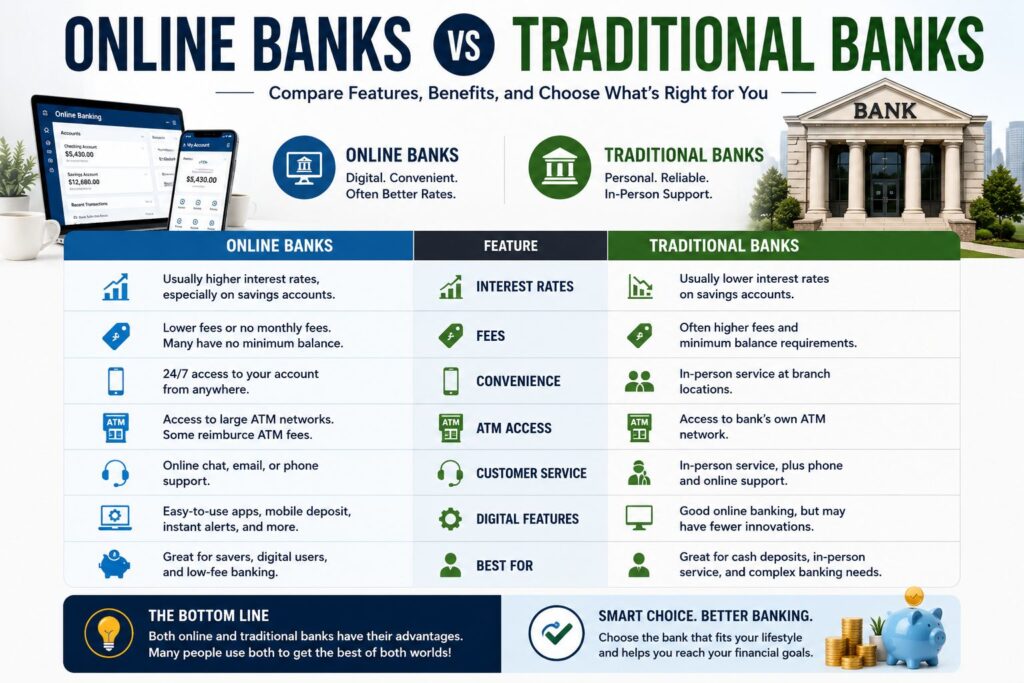
Feature Online Banks Traditional Banks
Interest Rates Usually Higher Usually Lower
Monthly Fees Often Lower Often Higher
Physical Branches No Yes
Cash Deposits Limited Easy
Mobile Banking Excellent Good
Customer Service Online/Phone Online + In-Person
ATM Access Large Networks Bank-Specific Networks
Who Should Choose an Online Bank?
An online bank may be a good fit if you:
• Want higher savings rates
• Prefer digital banking
• Rarely deposit cash
• Want lower fees
• Are comfortable managing finances online
Who Should Choose a Traditional Bank?
A traditional bank may be better if you:
• Frequently deposit cash
• Prefer face-to-face service
• Need complex financial services
• Feel more comfortable with physical branches
Can You Use Both?
Absolutely.
Many people combine the benefits of both options by:
• Using an online bank for savings
• Using a traditional bank for checking and cash deposits
This strategy can provide convenience while maximizing interest earnings.
Common Mistakes to Avoid
When choosing a bank, avoid:
• Selecting an account based only on advertising
• Ignoring fees and account requirements
• Overlooking interest rates
• Not reviewing ATM access
• Failing to compare multiple institutions
Which Banking Option Is Best for You?
Final Thoughts
Both online banks and traditional banks have their advantages. Online banks typically offer higher interest rates and lower fees, while traditional banks provide in-person service and easier cash handling.
The best choice depends on your financial habits, goals, and preferences. In many cases, using both types of banks can help you enjoy the benefits of each while minimizing their limitations.
How to Build Credit from Scratch: A Beginner’s Guide
How Credit Cards Really Work: A Beginner’s Guide
How to Start Investing with Little Money
FDIC Deposit Insurance
Frequently Asked Questions
- Are online banks safe?
- Can I use both an online bank and a traditional bank?
- Which banks offer higher interest rates?
- Can online banks accept cash deposits?