
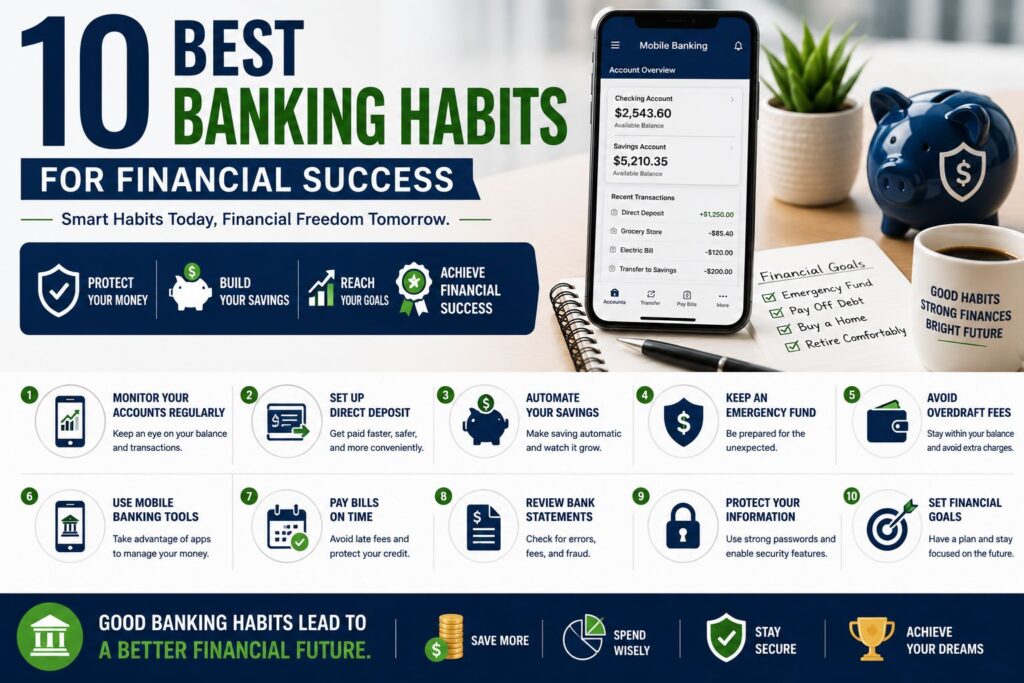
Banking habits play a major role in your financial success. Developing good banking habits helps you manage your money wisely, increase your savings, avoid unnecessary fees, and build a stronger financial future.
Developing strong banking habits can help you avoid fees, build savings, improve financial security, and reach your long-term goals faster.
Why Banking Habits Matter
Many people focus on earning more money, but successful financial management often starts with simple daily habits.
Good banking habits help you:
• Stay organized financially
• Avoid unnecessary fees
• Build savings consistently
• Protect your money
• Improve financial confidence
Small actions repeated over time can lead to significant financial success.
1. Monitor Your Accounts Regularly
One of the best habits is checking your accounts frequently.
Benefits include:
• Spotting unauthorized transactions
• Tracking spending habits
• Avoiding overdrafts
• Staying aware of account balances
Most banking apps make this easy by providing real-time updates.
2. Set Up Direct Deposit
Direct deposit automatically sends your paycheck to your bank account.
Advantages include:
• Faster access to your money
• Increased security
• Reduced risk of lost checks
• Easier budgeting
Many employers offer direct deposit as a standard payment option.
3. Automate Your Savings
Saving money becomes easier when it’s automatic.
Consider setting up automatic transfers from checking to savings accounts.
Even small amounts can grow significantly over time.
For example:
• $25 per week = $1,300 per year
• $50 per week = $2,600 per year
Consistency matters more than the amount.
- Keep an Emergency Fund
Unexpected expenses happen to everyone.
An emergency fund helps cover:
• Medical bills
• Car repairs
• Home maintenance
• Temporary job loss
Many financial experts recommend saving three to six months of essential expenses.
5. Avoid Overdraft Fees
Overdraft fees can quickly become expensive.
To avoid them:
• Monitor account balances
• Set low-balance alerts
• Maintain a small buffer in checking accounts
• Link a savings account for overdraft protection
6. Use Mobile Banking Tools
Modern banking apps provide valuable financial tools.
Features often include:
• Spending notifications
• Budget tracking
• Bill payment services
• Mobile check deposits
• Security alerts
Using these tools regularly can improve financial management.
7. Pay Bills on Time
Late payments can result in:
• Late fees
• Higher interest charges
• Credit score damage
Automating recurring bills can help prevent missed payments.
8. Review Bank Statements Monthly
Many people ignore their statements, but reviewing them can help identify:
• Fraudulent charges
• Subscription services
• Unnecessary fees
• Spending trends
A monthly review helps keep your finances under control.
9. Protect Your Banking Information
Cybersecurity is essential in today’s digital world.
Protect your accounts by:
• Using strong passwords
• Enabling two-factor authentication
• Avoiding public Wi-Fi for banking
• Monitoring account activity
Taking these precautions reduces the risk of fraud.
10. Set Financial Goals
Banking becomes more effective when you have clear goals.
Examples include:
• Building an emergency fund
• Saving for a home
• Paying off debt
• Investing for retirement
Specific goals provide motivation and direction.
Common Banking Mistakes to Avoid
Avoid these common financial mistakes:
• Ignoring account fees
• Spending without tracking expenses
• Carrying low balances
• Missing bill payments
• Not saving regularly
• Neglecting account security
Recognizing these mistakes can help you build better financial habits.
Final Thoughts on Banking Habits
Financial success is rarely the result of one big decision. Instead, it comes from consistent habits practiced over time. Monitoring your accounts, automating savings, paying bills on time, and protecting your financial information can help you build a stronger financial future.
The sooner you develop healthy banking habits, the easier it becomes to achieve your financial goals and maintain long-term financial stability.
You may also enjoy these financial guides:
Online Banks vs Traditional Banks: Which One Is Better?
How to Choose the Right Bank Account
Checking vs Savings Accounts: What’s the Difference?
Beginner’s Guide to Personal Finance
For additional banking education, visit the Consumer Financial Protection Bureau.
Enlace: https://www.consumerfinance.gov