
What does car insurance cover?
This is one of the most common questions new drivers ask before purchasing auto insurance.
Car insurance is one of the most important financial protections you can have as a driver. Whether you’re buying your first policy or reviewing your current coverage, understanding what car insurance actually covers can help you avoid expensive mistakes and make smarter financial decisions.
Many drivers pay for insurance every month without fully understanding what they’re protected against. Some assume every accident is covered, while others discover too late that certain damages aren’t included in their policy.
This guide explains the different types of car insurance coverage, how they work, and how to choose the right protection for your needs.
Why Car Insurance Matters
Car insurance protects you financially if your vehicle is involved in an accident, damaged by natural disasters, stolen, or if you’re responsible for injuries or property damage.
Without insurance, even a minor accident could cost thousands of dollars in repair bills, medical expenses, or legal claims.
Besides financial protection, most U.S. states require drivers to carry at least minimum liability insurance.
What Does Car Insurance Usually Cover?
A standard auto insurance policy typically includes several different types of coverage.
These include:
- Liability Coverage
- Collision Coverage
- Comprehensive Coverage
- Personal Injury Protection (PIP)
- Medical Payments Coverage
- Uninsured and Underinsured Motorist Coverage
Not every policy automatically includes all of these coverages. Your protection depends on the policy you purchase.
Liability Coverage
Liability insurance is the most basic and legally required coverage in most states.
It helps pay for damages you cause to other people after an accident.
Liability insurance generally covers:
- Medical expenses for injured people
- Property damage to another vehicle
- Damage to fences, buildings, or other property
- Legal defense costs if you’re sued
However, liability insurance does not pay for repairs to your own vehicle.
Collision Coverage
Collision insurance helps repair or replace your own vehicle after an accident, regardless of who caused it.
It usually covers accidents involving:
- Another vehicle
- Trees
- Guardrails
- Utility poles
- Road barriers
If your vehicle is declared a total loss, collision coverage may pay its actual cash value after your deductible.
Comprehensive Coverage
Comprehensive insurance covers damage that isn’t caused by a collision.
Examples include:
- Vehicle theft
- Vandalism
- Fire
- Floods
- Hail
- Falling trees
- Animal collisions
- Broken windshields
Many lenders require comprehensive coverage if you’re financing or leasing a vehicle.
Personal Injury Protection (PIP)
Personal Injury Protection, commonly known as PIP, helps cover medical expenses for you and your passengers after an accident.
Depending on your state, PIP may also cover:
- Lost wages
- Rehabilitation
- Funeral expenses
- Essential household services during recovery
Some states require PIP, while others make it optional.
Medical Payments Coverage (MedPay)
Medical Payments Coverage pays medical bills regardless of who caused the accident.
It may help cover:
- Ambulance fees
- Hospital visits
- Surgery
- X-rays
- Doctor appointments
Unlike PIP, MedPay usually doesn’t cover lost income.
Uninsured and Underinsured Motorist Coverage
Unfortunately, not every driver carries enough insurance.
This coverage protects you if:
- The at-fault driver has no insurance.
- The driver doesn’t have enough insurance.
- You’re involved in a hit-and-run accident.
Without this protection, you could end up paying for someone else’s mistake.
What Isn’t Covered?
Car insurance doesn’t cover every situation.
Most policies exclude:
- Normal maintenance
- Mechanical breakdowns
- Engine failure
- Tire wear
- Intentional damage
- Racing
- Driving without permission
- Commercial use (unless covered)
Always read your policy carefully to understand exclusions.
Optional Car Insurance Coverages
Many insurance companies offer additional protection.
Popular options include:
Roadside Assistance
Provides help with:
- Flat tires
- Dead batteries
- Lockouts
- Towing
- Fuel delivery
Rental Car Reimbursement
Pays for a rental vehicle while your car is being repaired after a covered claim.
Gap Insurance
Gap insurance covers the difference between your car’s value and the remaining loan balance if your vehicle is totaled.
This coverage is especially valuable for newer vehicles with loans.
How Much Coverage Do You Need?
The right amount of coverage depends on several factors:
- Your vehicle’s value
- Your savings
- Your state requirements
- Your driving habits
- Whether your car is financed
Many financial experts recommend carrying more than the minimum required liability coverage to better protect your assets.
Tips for Choosing the Right Policy
Before purchasing insurance, consider these tips:
- Compare quotes from multiple companies.
- Understand your deductible.
- Review policy exclusions.
- Ask about available discounts.
- Bundle home and auto insurance if possible.
- Maintain a good driving record.
- Review your policy every year.
Shopping around can save hundreds of dollars annually.
Understanding what car insurance covers helps you choose the right protection.
Frequently Asked Questions
Does full coverage mean everything is covered?
No. “Full coverage” generally means liability, collision, and comprehensive insurance, but every policy has exclusions.
Is comprehensive coverage worth it?
If your vehicle has significant value, comprehensive coverage can protect against expensive losses like theft, storms, or vandalism.
Can I drive without insurance?
In most U.S. states, driving without insurance is illegal and can result in fines, license suspension, or vehicle impoundment.
What deductible should I choose?
Higher deductibles usually lower your monthly premium, while lower deductibles reduce your out-of-pocket costs after a claim.
How Insurance Deductibles Work
One of the most important parts of any car insurance policy is the deductible. A deductible is the amount you agree to pay out of your own pocket before your insurance company helps cover the remaining costs of a covered claim.
For example, if you have a $500 deductible and your vehicle suffers $3,000 in covered damage after an accident, you would pay the first $500, while your insurance company would cover the remaining $2,500.
Choosing a higher deductible usually lowers your monthly premium because you’re accepting more financial responsibility if an accident occurs. On the other hand, a lower deductible generally results in higher monthly premiums but reduces your out-of-pocket expenses when filing a claim.
Finding the right balance depends on your budget, emergency savings, and comfort level with financial risk.
Factors That Affect Your Car Insurance Premium
Many people assume that everyone pays roughly the same amount for car insurance. In reality, insurance companies calculate premiums using many different factors.
Some of the most common include:
- Your age
- Driving history
- Credit score (where permitted)
- Location
- Type of vehicle
- Annual mileage
- Claims history
- Coverage limits
- Deductible amount
Drivers with clean records, safe vehicles, and good credit often qualify for lower insurance rates than drivers with multiple accidents or traffic violations.
How to Save Money on Car Insurance
Paying less for car insurance doesn’t necessarily mean buying the cheapest policy. Instead, it means finding the best value for the protection you need.
Some smart ways to reduce your premium include:
- Compare quotes from several insurance companies every year.
- Bundle your home and auto insurance.
- Maintain a clean driving record.
- Increase your deductible if you have enough emergency savings.
- Ask about student, military, or safe driver discounts.
- Install anti-theft devices if your insurer offers discounts.
- Avoid filing small claims that could increase future premiums.
Small savings each month can add up to hundreds of dollars every year.
Common Car Insurance Myths
There are many misconceptions about car insurance that can lead people to make poor financial decisions.
Myth 1: Red cars cost more to insure.
Insurance companies don’t base premiums on your car’s color. They consider factors such as make, model, age, repair costs, and safety ratings.
Myth 2: Minimum coverage is always enough.
State minimum coverage may satisfy legal requirements, but it often provides limited financial protection after a serious accident.
Myth 3: Older cars never need comprehensive coverage.
If replacing your vehicle would create a financial burden, comprehensive coverage may still be worth considering.
Understanding the facts helps you make better insurance decisions.
When Should You Review Your Policy?
Many drivers purchase insurance once and never think about it again. However, reviewing your policy regularly can help ensure you’re not overpaying or missing important coverage.
You should review your insurance when:
- Buying a new vehicle
- Moving to a different city or state
- Getting married
- Adding a teenage driver
- Improving your credit score
- Paying off your car loan
- Experiencing major life changes
Comparing policies every year may help you find better coverage at a lower price.
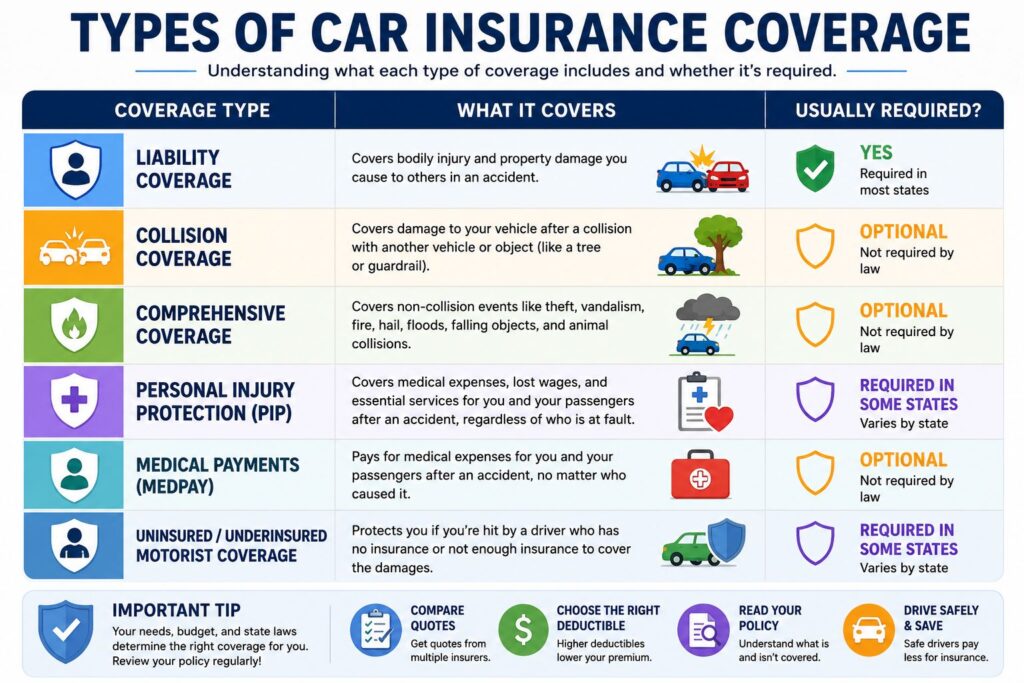
Coverage Type What It Covers Usually Required?
Liability Damage and injuries you cause to others Yes (Most States)
Collision Damage to your own vehicle after an accident Optional
Comprehensive Theft, fire, vandalism, storms, falling objects Optional
Personal Injury Protection (PIP) Medical expenses and lost wages Required in some states
Medical Payments (MedPay) Medical expenses for you and passengers Optional
Uninsured Motorist Protection if the other driver has no insurance Required in some states
Final Tips Before Buying Car Insurance
Before purchasing any policy, take time to compare more than just the monthly premium. A cheaper policy may include higher deductibles, fewer benefits, or lower coverage limits that leave you exposed after an accident.
Always read the policy carefully, understand what is and isn’t covered, and ask questions if something isn’t clear. Insurance should provide peace of mind, not confusion.
Choosing the right policy today can protect your finances for years to come and help you avoid unexpected expenses after an accident.
Final Thoughts
Understanding what car insurance covers can help you make smarter financial decisions and avoid costly surprises. The right policy should protect both your vehicle and your financial future while fitting your budget.
Before purchasing or renewing your insurance, compare different policies, understand exactly what’s covered, and choose protection that matches your personal needs rather than simply selecting the cheapest option.
- Understanding Health Insurance
- Best Car Insurance Companies
- How to Lower Car Insurance Premium
Learn more about auto insurance requirements from the Insurance Information Institute. - https://www.nhtsa.gov/