
Stocks vs ETFs is one of the first comparisons new investors make when deciding where to invest. Both investment options can help you build wealth, but they work differently and carry different levels of risk.
Understanding the differences between Stocks vs ETFs can help you make smarter investment decisions based on your financial goals, risk tolerance, and investing experience.
This guide explains how stocks and ETFs work, their advantages and disadvantages, and which option may be better for beginners.
Stocks vs ETFs: Understanding Stocks First
Stocks represent partial ownership in a company.
When you buy shares of a company, you become a shareholder. If the company performs well, the value of your investment may increase. Some companies also pay dividends, providing additional income to investors.
Examples of publicly traded companies include businesses in technology, healthcare, finance, energy, and consumer products.
Individual stocks can generate strong returns, but they also carry higher risk because your investment depends on the success of a single company.
Stocks vs ETFs: Understanding ETFs
Exchange-Traded Funds (ETFs) are investment funds that hold many different assets inside a single investment.
An ETF may include:
- Hundreds of company stocks
- Government bonds
- International investments
- Real estate investments
- Commodities
Instead of buying shares of just one company, purchasing one ETF allows you to own small portions of many companies at once.
This diversification helps reduce investment risk.
When comparing stocks vs ETFs, it’s important to understand how each investment works before deciding which one fits your financial goals.
Stocks vs ETFs: Key Differences
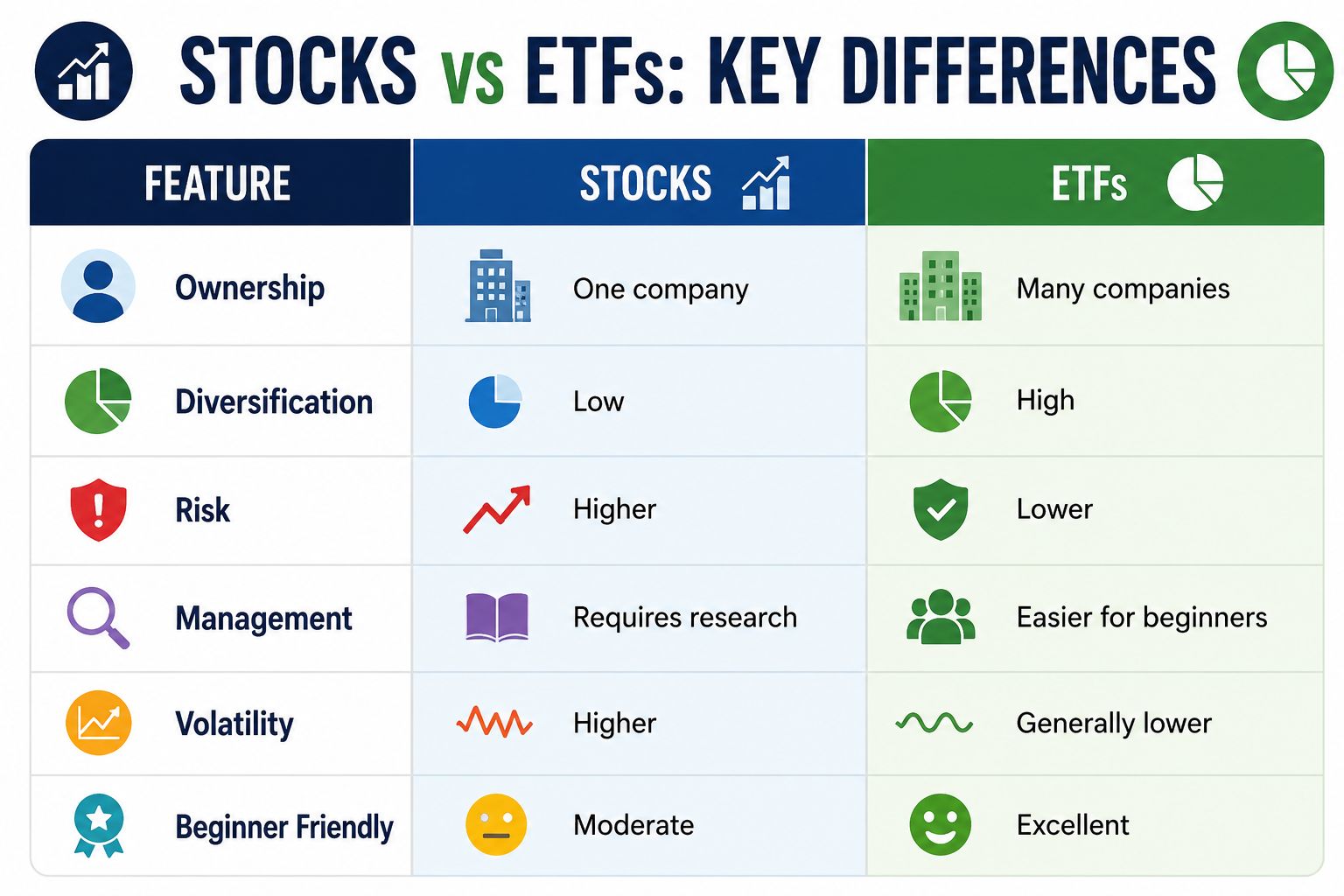
For most beginner investors, understanding stocks vs ETFs is one of the most important first steps toward building long-term wealth.
Advantages of Investing in Stocks
Investing in individual stocks offers several potential benefits.
Higher Growth Potential
Successful companies can generate significant long-term returns.
Some of the world’s largest companies have produced impressive gains for investors over decades.
Dividend Income
Many established companies distribute dividends to shareholders, providing passive income in addition to potential price appreciation.
More Control
Stock investors choose exactly which companies they want to own.
This flexibility allows investors to build customized portfolios.
Disadvantages of Investing in Stocks
Although stocks can be rewarding, they also involve greater risk.
Potential disadvantages include:
- Larger price swings
- Company-specific risk
- More research required
- Emotional decision-making
- Greater volatility during market downturns
Poor performance from one company can significantly impact your investment.
Advantages of Investing in ETFs
Many financial experts recommend ETFs for beginners.
Diversification
Owning multiple companies reduces the impact of one business performing poorly.
Lower Risk
Because ETFs spread investments across many companies, they are generally less volatile than individual stocks.
Easy to Manage
ETFs require less ongoing research compared to building a portfolio of individual stocks.
Lower Costs
Many ETFs have very low expense ratios, making them affordable long-term investments.
Disadvantages of ETFs
ETFs also have a few limitations.
These include:
- Lower potential returns than the best-performing individual stocks
- Small management fees
- Less control over individual company selection
Despite these disadvantages, many investors consider ETFs one of the safest ways to begin investing.
Which Is Better for Beginners?
For most new investors, ETFs are often the better starting point.
They provide:
- Instant diversification
- Lower overall risk
- Simpler portfolio management
- Long-term growth potential
Once investors become more comfortable with the market, many choose to add individual stocks alongside their ETF investments.
Can You Invest in Both?
Absolutely.
Many experienced investors combine both investment types.
For example:
- 80% invested in diversified ETFs
- 20% invested in carefully selected individual stocks
This strategy provides stability while still allowing opportunities for higher returns.
Tips for Beginner Investors
If you’re just getting started:
- Invest consistently every month.
- Focus on long-term growth.
- Diversify your investments.
- Avoid emotional buying and selling.
- Continue learning about personal finance.
- Review your portfolio periodically.
Successful investing is usually built through patience rather than trying to predict short-term market movements.
Frequently Asked Questions
Are ETFs safer than stocks?
Generally, yes. ETFs are diversified across many investments, reducing the risk associated with a single company.
Can I lose money with ETFs?
Yes. Like all investments, ETFs can decline in value during market downturns. However, diversification may reduce overall risk.
Should I invest in stocks or ETFs first?
Many financial professionals recommend starting with diversified ETFs before investing in individual stocks.
Do ETFs pay dividends?
Many ETFs distribute dividends, depending on the investments they hold.
Final Thoughts
Understanding the differences between stocks vs ETFs is one of the first steps toward becoming a confident investor.
While individual stocks may offer higher potential returns, ETFs provide diversification, lower risk, and easier portfolio management. For most beginners, starting with ETFs and gradually expanding into individual stocks is a practical long-term strategy.
The most important step is to begin investing consistently, stay patient, and focus on your long-term financial goals.
- What Is Compound Interest and How Does It Work?
- How to Build Long-Term Wealth Through Investing
- How to Start Investing With Little Money
- Investing for Beginners: A Simple Guide
- Learn more about investing basics from the Investor.gov website.